
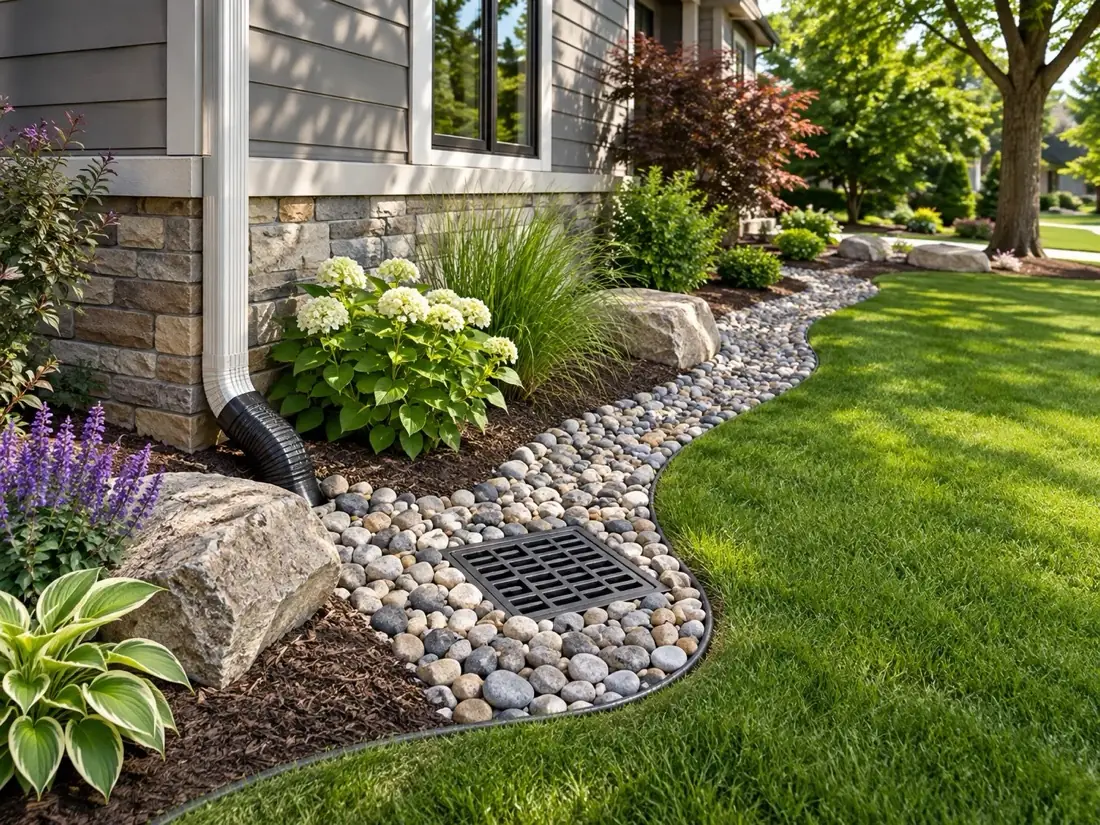
If your yard turns into a pond after every storm, you're not alone. Red clay is great at holding water and bad at letting it drain. Here's why it happens and how to fix it.
Why water pools in Gwinnett yards
- Clay soil drains slowly. Heavy rain falls faster than clay can soak it up.
- Low spots. Settled soil, old tree stumps and tire ruts leave dips that collect water.
- Grading that slopes the wrong way. Builder grading settles over time, and some yards end up sloping toward the house.
- Downspouts. A single roof can send a lot of water to one spot at the base of the house.
- Compaction. Packed-down soil from foot traffic or equipment lets even less water in.
Fixes that work
Regrading
Reshaping the ground is often the real fix. A common guideline is for the ground to drop about 6 inches over the first 10 feet away from the house. See grading & re-sloping.
Downspout extensions and buried lines
Running downspouts through buried pipe to a spot well away from the house is one of the simplest and most effective fixes.
French drains
A gravel-filled trench with a perforated pipe collects water underground and carries it somewhere it can drain. Good for wet strips along a fence line or the bottom of a slope.
Channel drains
A grated drain set into concrete or pavers catches water running across a driveway or patio before it reaches the garage or house.
Dry creek beds
A shallow channel lined with river rock moves surface water across the yard and looks like part of the landscape.
Aeration
For lawns that drain poorly because the soil is packed down, core aeration helps water soak in. It won't fix a grading problem by itself.
When to call a pro
Figure out where the water comes from
Before picking a fix, watch the yard during a heavy rain. Where does water enter the property? Where does it collect, and how long does it stay? Common sources in Gwinnett are downspouts that empty right at the foundation, runoff from a neighbor's yard or the street, a low spot in the middle of the lawn, and water that seeps out of a slope above the house. The right fix depends on which one you have, and many yards have more than one.
Fixes that work on red clay
- Regrading. Reshaping the ground so it slopes away from the house is often the first and cheapest step. A gentle slope of a few inches over the first ten feet makes a big difference.
- French drains. A gravel trench with a perforated pipe collects water that sits in the soil and carries it away. Our guide to signs you need a French drain covers when it makes sense.
- Buried downspouts. Running downspouts underground to a pop-up emitter or the street keeps roof water away from the foundation and the lawn.
- Channel drains. A grate set across a driveway or patio catches surface water before it runs into the garage or the house.
- Dry creek beds. A shallow channel lined with river rock moves water across the yard and looks like a landscape feature instead of a drain.
What not to do
Do not just dump topsoil on a wet spot. It might look better for a few weeks, but the clay underneath still holds water and the low spot comes back. Do not send water toward a neighbor's property either. A good drainage plan moves water to a safe outlet such as the street, a storm drain or a part of the yard that can handle it.
Drainage and your foundation
Standing water near the house is more than a soggy lawn. Over time it can lead to a damp crawlspace, mold, and pressure on foundation walls. If water collects along the house after storms, fixing it should move to the top of the list.
How long does a drainage fix take?
Most residential drainage jobs, such as a French drain along one side of the house or buried downspouts, take one to three days. Larger regrading projects can take longer, especially if the lawn needs to be restored with new sod afterward.
A quick checklist
Check gutters and downspouts first, then the slope next to the house, then the low spots in the lawn. Fixing the first two often solves most of the problem.
Quick answers
Will aeration fix standing water?
It can help a little with compacted soil, but it will not fix a yard that slopes toward the house or collects runoff.
Is standing water bad for my lawn?
Yes. Grass that sits in water loses roots, invites fungus and leaves bare spots.
Call if water is pooling against your foundation, getting into a crawl space or basement, or washing soil away. Those usually need grading and drainage work together. EVG handles yard drainage across Gwinnett.