
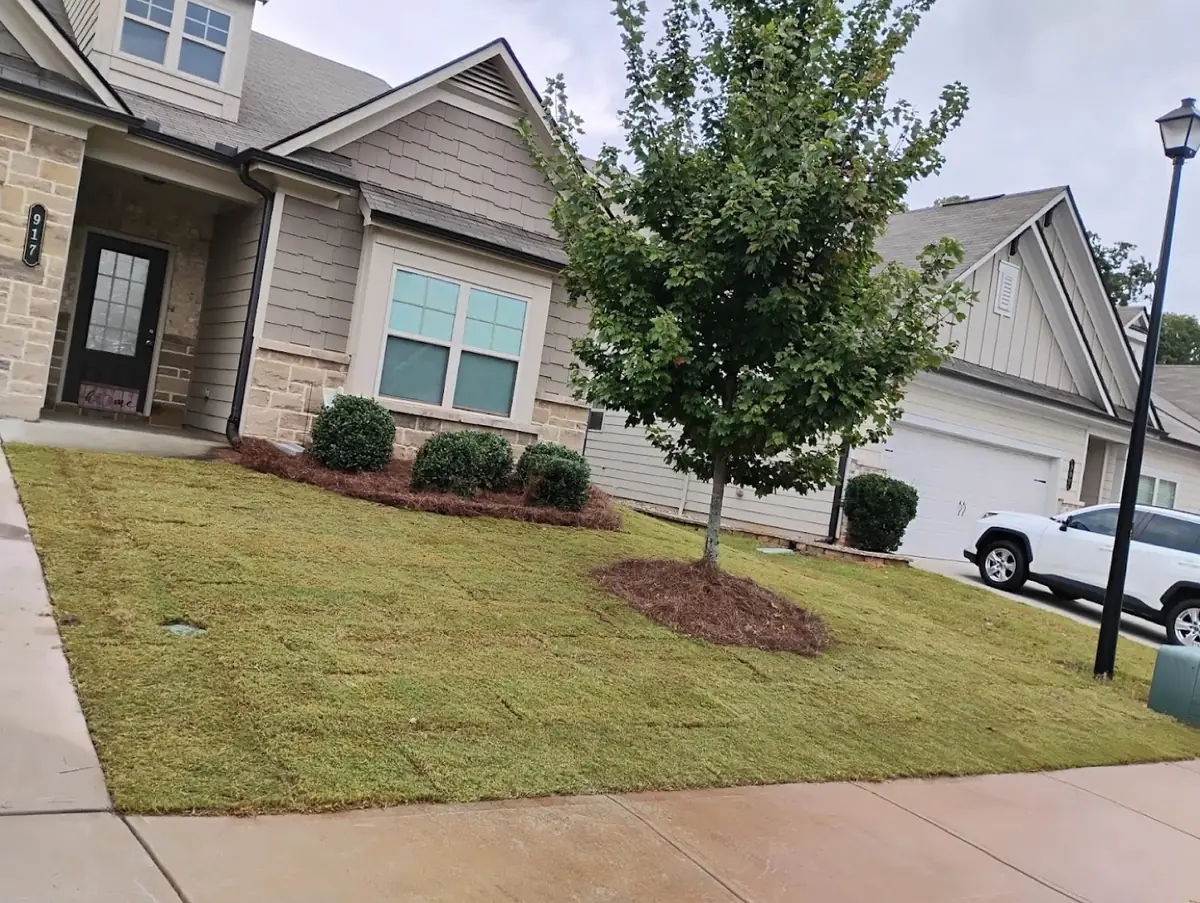
“How much for sod?” is one of the first questions we get. The honest answer is that it depends on the yard, but the price is not a mystery. Every sod quote is built from the same handful of pieces, and once you know them you can compare quotes fairly.
Sod is priced by the square foot
Sod is sold by the pallet, and one pallet usually covers somewhere around 400 to 500 square feet depending on the farm and the grass. Installers then price the job by the square foot, with the labor and prep folded in. To get a rough idea of your size, measure the length and width of each area you want covered and multiply. A 40 by 50 foot backyard is 2,000 square feet, or about four to five pallets.
Larger jobs usually cost less per square foot because the delivery, equipment and setup are spread over more ground. Very small patches cost more per foot for the same reason.
What changes the price
- Tear-out. Removing old grass, weeds and roots is real work. A yard that is mostly bare clay costs less to prep than one with a thick mat of weeds.
- Grading. If water pools near the house or the yard has ruts and low spots, the ground needs to be reshaped before sod goes down. Skipping this is the most common reason new sod fails.
- Soil work. Gwinnett red clay packs hard. Loosening it, and sometimes adding topsoil, helps roots push in.
- Grass type. Bermuda, Zoysia, Centipede and Fescue are priced differently. Zoysia usually costs more than Bermuda.
- Access. A wide open front yard is quicker than a fenced backyard where every roll has to be carried through a gate.
- Irrigation. Adding a sprinkler system is a separate cost, but it protects the investment, especially through a Georgia summer.
How to read a sod quote
When you compare quotes, check that each one includes the same things: removal of the old lawn, grading, soil prep, the sod itself, rolling after install and haul-away of debris. A low number that leaves out prep is not a better deal. It is a lawn that will struggle.
Ask what grass is being quoted and why it fits your sun. A Bermuda quote for a shady yard is a warning sign.
Ways to keep the cost down
- Sod the areas that matter most first, like the front yard, and do the back later.
- Pick a grass that fits your sun so you are not paying to replace it.
- Time the job for late spring or summer for warm-season grass, when it roots fastest. Our guide on when to lay sod in Georgia explains why.
- Water it properly for the first few weeks. Most sod that dies, dies from too little water early on.
Get a real number
Hidden costs to ask about
Some quotes look low because they leave out work that still has to happen. Before you sign, ask whether the price includes hauling away the old lawn and debris, delivery of the sod, any topsoil, and cleanup of sidewalks and driveways afterward. Ask whether irrigation heads will be adjusted if you have a sprinkler system. Those small items add up.
Sod vs. seed
Seed costs less up front, but it takes a full season or more to fill in, needs careful watering, and often washes out on Georgia slopes during summer storms. Sod gives you a finished lawn in a day and holds soil in place right away. For most homeowners who want a usable yard quickly, sod is worth the difference.
Gwinnett yards and sod
Most sunny Gwinnett lawns are Bermuda or Zoysia, and both are widely available from Georgia sod farms. Shady lots in established neighborhoods often need fescue or a shade-tolerant Zoysia. New construction yards usually cost more to prep because of debris and packed clay left behind by the builder, while older lawns cost more to tear out because of thick weeds and roots.
Quick answers
Is sod cheaper in the fall?
Not usually, but timing affects how well it takes. Warm-season sod roots best in late spring and summer.
Do I need irrigation for new sod?
Not required, but it makes the first weeks far easier and protects the lawn through summer heat.
How long until I can use the lawn?
Light use after two to three weeks once it has rooted. Heavy play is better after a month or more.
Can you sod just part of the yard?
Yes. Many homeowners start with the front yard or the worst area and add more later.
The only way to get an exact price is to look at the yard. EVG walks the property with you, measures, checks the slope and soil, and gives you a free written estimate for sod installation anywhere in Gwinnett County, from Lawrenceville to Buford.