
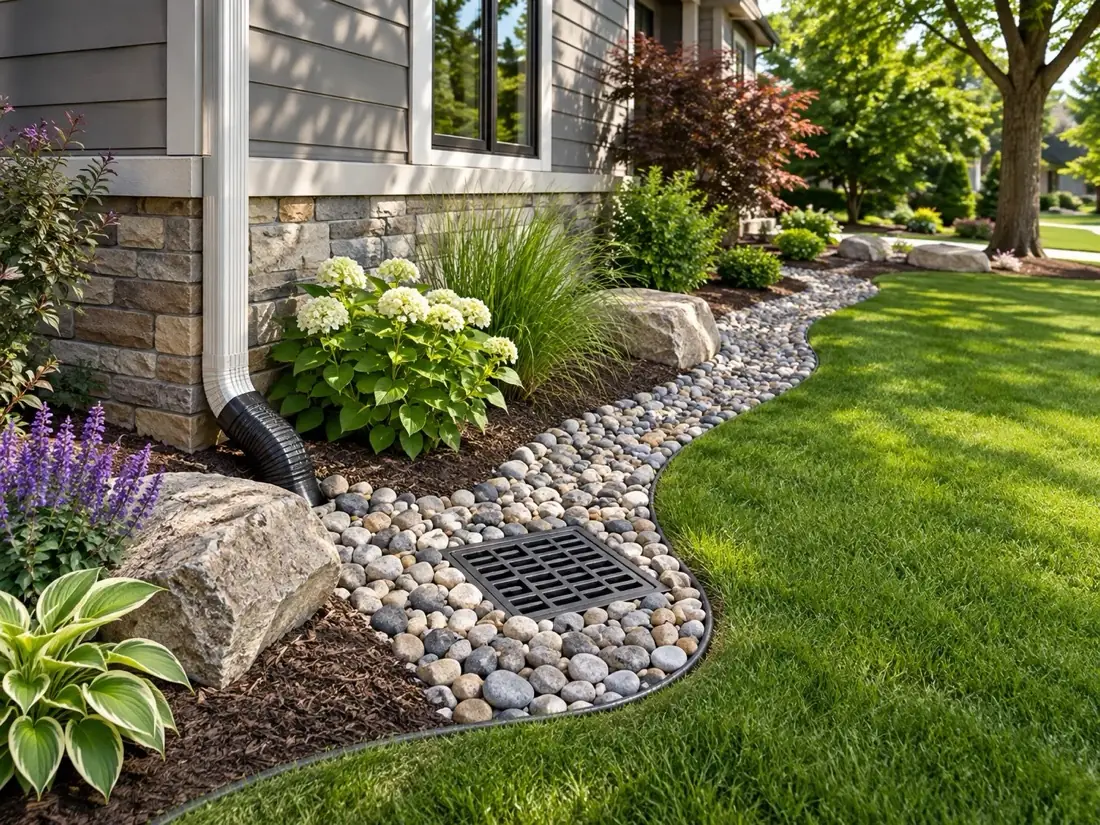
A French drain is a gravel-filled trench with a perforated pipe in the bottom. Water soaks into the gravel, runs into the pipe and gets carried away from where it is causing trouble. On Gwinnett red clay, which holds water instead of draining it, a French drain is often the fix that finally works.
1. Water stands in the same spot after every rain
If a puddle shows up in the same place every storm and takes a day or more to go away, the soil there cannot drain on its own. A French drain gives that water somewhere to go.
2. The lawn stays soggy for days
Grass that squishes underfoot long after the rain stops is sitting in saturated soil. That kills roots, invites moss and fungus, and leaves ruts when you mow.
3. Water near the foundation or in the crawlspace
Water that collects against the house can find its way into a basement or crawlspace. Downspouts that dump at the foundation make this worse. A French drain along the house, often paired with buried downspout lines, moves that water away.
4. Mulch and soil wash out of your beds
If you find mulch in the driveway after a storm, water is running across the yard instead of through it. That usually means the slope or the drainage needs work.
5. Erosion and gullies on a slope
Runoff from a neighbor's yard or a hill above you cuts channels through the lawn. A French drain at the top of the problem area can intercept that water before it does damage.
When a French drain is not the whole answer
Sometimes the real problem is the shape of the ground. If the yard slopes toward the house, regrading comes first. Downspouts may need to be buried and run to daylight. On steep lots, a retaining wall with drainage behind it may be the better fix. Our guide on fixing standing water covers the other options.
What installation involves
- Finding where the water comes from and where it can safely go.
- Digging a sloped trench and lining it with fabric to keep clay out.
- Laying gravel and perforated pipe, then more gravel.
- Running the line to an outlet, and restoring the lawn or beds on top.
French drain vs. other drainage fixes
A French drain is best for water that soaks into the ground and sits there. If the problem is water rushing across the surface during storms, a channel drain, regrading or a dry creek bed may do more. If roof water is the main source, burying the downspouts may solve most of it. Often the best fix is a combination.
How long a French drain lasts
Built correctly, with fabric to keep clay out of the gravel and enough slope to keep water moving, a French drain can work for many years. The most common reason they fail is clogging, which almost always comes from skipping the fabric or using the wrong gravel.
Will it ruin my lawn?
Installing a drain means digging a trench, so the lawn along that line will be disturbed. When the work is done, the trench is filled and the surface is restored with soil and sod or gravel. Within a few weeks the line is usually hard to spot.
Questions to ask before you hire
- Where will the water be discharged?
- Is filter fabric used around the gravel?
- How deep and how long will the trench be?
- Will downspouts be tied in?
- How will the lawn be restored afterward?
Why drainage is a bigger deal in Gwinnett
Gwinnett gets around 50 inches of rain a year, and much of it comes in heavy summer storms that drop a lot of water fast. Add red clay that drains slowly, newer subdivisions where lots were graded quickly, and older neighborhoods where downspouts were never extended, and you get a lot of soggy yards. Sloped lots in Lilburn, Buford and Sugar Hill often see runoff from above, while flatter lots in Lawrenceville and Dacula tend to have water that just sits. The good news is that most of these problems are fixable with the right combination of grading, drains and downspout work. The key is diagnosing the source first, so you only pay for the fix you actually need.
Quick answers
How deep is a French drain?
Most residential French drains are dug one to two feet deep, depending on where the water sits and where it needs to go.
Can a French drain go near the house?
Yes. A drain along the foundation is common, as long as it carries water away to a safe outlet.
Does a French drain need maintenance?
Very little. Keep the outlet clear of leaves and debris, and make sure gutters are not overflowing into it.
EVG installs yard drainage all over Gwinnett County. We will look at where the water goes during a storm and give you a free estimate.