
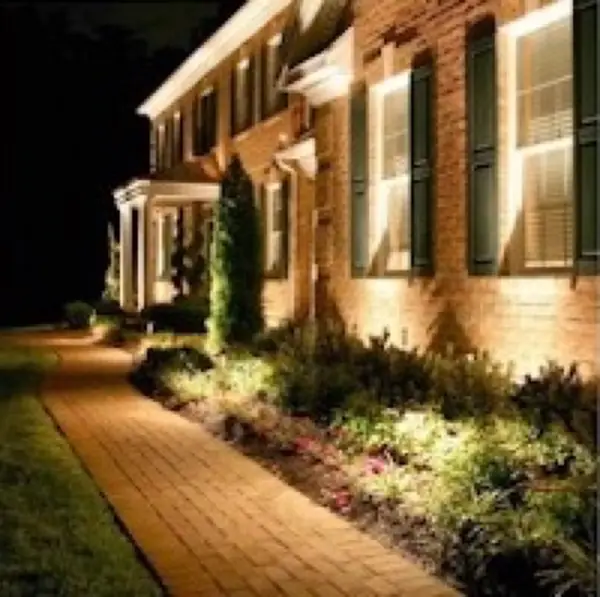
Good landscape lighting makes a home safer, easier to use after dark and a lot better looking from the street. Bad lighting looks like an airport runway. Here is how to get it right.
Start with what you want to see
Walk the yard at night and decide what matters: the path to the front door, the steps down to the patio, a big tree, the front of the house. Light those, and leave the rest dark. Contrast is what makes lighting look good.
The main types of fixtures
- Path lights sit low along walkways and beds. Space them out and stagger them so the walk does not look like a runway.
- Up-lights aim up into trees or across the face of the house to add depth.
- Wall and step lights fit into retaining walls and steps, lighting the tread so no one trips.
- Down-lights mounted in trees cast soft light down, like moonlight through the branches.
- Spot and flood lights highlight one feature, such as a flag, sign or water feature.
Go LED and low voltage
Low-voltage LED systems are the standard now. They use far less power than older halogen fixtures, run cool and last for years. Look for solid brass or aluminum housings that will stand up to Georgia humidity and storms.
Plan the power
A low-voltage system runs from a transformer plugged into an outdoor outlet. The transformer size depends on how many fixtures you have, and wire runs need to be planned so lights at the end of the line are not dimmer than the rest. Burying the wire keeps it safe from mowers and aerators.
Timers and controls
A photocell turns lights on at dusk, and a timer turns them off late at night. Some systems can be controlled from your phone.
Light the hardscape too
If you are building a patio or retaining wall, plan lighting at the same time. Running wire before the pavers go down is far easier than adding it later.
Design tips that make lighting look professional
- Less is more. A few well-placed fixtures look better than dozens of lights in a row.
- Hide the source. You want to see the glow, not the bulb. Tuck fixtures behind plants or aim them away from where people stand.
- Use warm light. A warm white color looks inviting on homes, stone and plants. Cool blue-white light can look harsh.
- Layer it. Combine path lights, up-lights and step lights so the yard has depth.
- Think about neighbors. Aim lights so they do not shine into windows next door.
Lighting for safety and security
Lighting steps, walkways and changes in level is the most important job lighting does. It also makes your home less inviting to anyone looking for a dark place to hide. Lighting the front door, the side gate and the driveway covers most of the safety needs.
Caring for your system
Once or twice a year, clean fixture lenses, trim back plants that have grown over lights, and check that wire runs have not been exposed. LED fixtures rarely need bulb changes, but connections can loosen over time and are easy to fix.
Adding lighting to an existing yard
You do not need a full makeover to add lighting. Path lights along an existing walkway, a few up-lights on the house or trees, and step lights on existing stairs can be added with minimal digging. The wire is buried in a narrow slit in the lawn or beds.
What a lighting plan includes
A good plan shows where each fixture goes, what type it is, how wire will be routed, and what size transformer is needed. It should also cover how the lights will be controlled, whether by timer, photocell or app.
Lighting in Gwinnett neighborhoods
A lot of Gwinnett homes sit on wooded lots with mature oaks and pines, which are perfect for up-lighting and moonlighting from the branches. Newer subdivisions tend to have open front yards and young trees, where path lights and a few up-lights on the house do most of the work. If your neighborhood has an HOA, check whether it has rules about light color or brightness. Most do not, but some ask that lights avoid shining into neighboring homes.
Quick answers
How many lights does a typical yard need?
It depends on the size and what you want to show off. Many front yards look great with a handful of path lights and a few up-lights.
Can lighting be added to a new patio?
Yes, and it is easiest to plan it while the patio is being built so wire can run under the pavers.
Do solar lights work as well?
Solar lights are cheap and easy, but they are much dimmer and often fade after a few hours or on cloudy days.
EVG designs and installs landscape lighting across Gwinnett County. Estimates are free.