
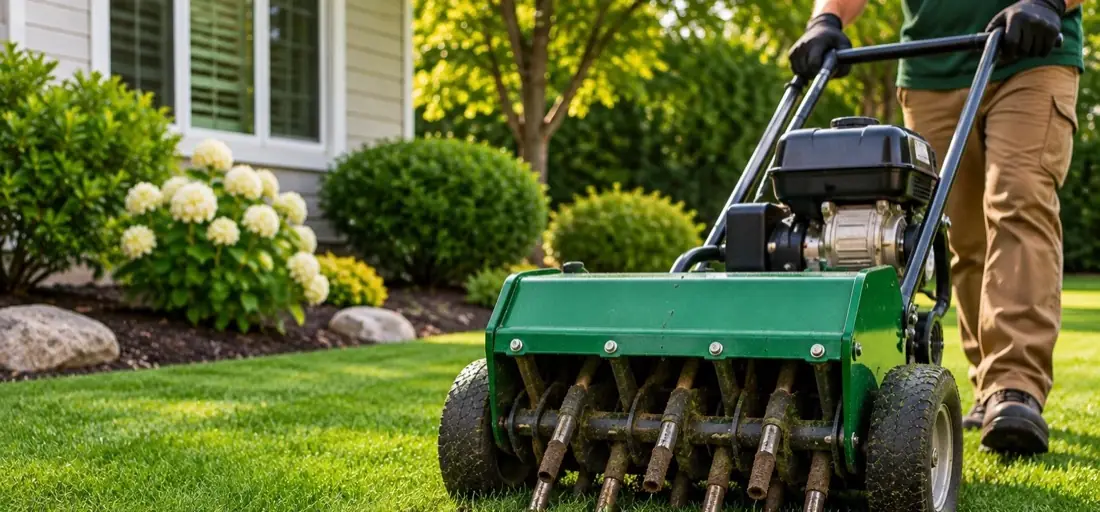
Aeration is one of the best things you can do for a lawn growing in Georgia clay, but timing matters. Aerate at the wrong time and the grass has a hard time recovering.
The right time depends on your grass
- Bermuda and Zoysia (warm-season): aerate in late spring to early summer, roughly May through July, while the grass is actively growing and can fill in the holes quickly. Avoid aerating when it's dormant.
- Fescue (cool-season): aerate in the fall, usually September to October, often together with overseeding.
Signs your lawn needs it
- Water puddles or runs off instead of soaking in.
- The soil is so hard a screwdriver won't push in.
- Grass is thin in high-traffic areas.
- The lawn struggles even with regular watering and care.
Core vs. spike aeration
Core aeration pulls out small plugs of soil, which actually relieves compaction. Spike aeration just pokes holes and can pack the soil around them even tighter. On clay soil, core aeration is the one to use.
Before and after
- Mow the lawn first.
- Water a day or so before, so the soil is moist but not muddy. Cores pull out much more easily.
- Mark sprinkler heads and shallow lines.
- Afterward, leave the plugs on the lawn. They break down in a week or two.
- Keep the lawn watered while it recovers.
Why Georgia lawns need aeration
Red clay packs down hard. Every time someone walks, plays or mows on the lawn, the soil gets a little tighter. Over time, roots cannot get the air, water and nutrients they need, and the grass thins out even if you water and fertilize. Core aeration pulls small plugs of soil out of the ground, which opens space for roots and lets water soak in instead of running off.
The best time for each grass
- Bermuda and Zoysia: late spring to early summer, after the lawn has fully greened up and is actively growing. In Gwinnett that is usually May through July.
- Centipede: early summer, once it is fully green. Go easy, since Centipede does not like to be stressed.
- Fescue: early fall, usually September or early October, ideally paired with overseeding.
Avoid aerating warm-season grass while it is dormant in winter or during a drought. The lawn needs to be growing so it can recover quickly.
Signs your lawn needs it
- Water puddles or runs off instead of soaking in.
- A screwdriver is hard to push into the soil.
- Grass is thin in high-traffic areas like paths and play spots.
- The lawn feels spongy from a thick layer of thatch.
- It has been more than a year or two since the last aeration.
Core aeration vs. spike aeration
Core aeration removes plugs of soil. Spike aeration just pokes holes, which can actually press the clay tighter around the hole. On Georgia clay, core aeration is the one that works.
What to do after aerating
Leave the plugs on the lawn. They break down in a week or two and return nutrients to the soil. Water the lawn well, and if you are overseeding fescue, spread the seed right after aerating so it falls into the holes. It is also a good time to fertilize, since the nutrients reach the roots more easily.
How often to aerate
Most Gwinnett lawns do well with aeration once a year. Heavily used lawns, or yards with very compacted clay, may benefit from twice a year. Newer sod usually does not need aeration for the first year.
Aeration and other lawn care
Aeration works best as part of a regular plan: mowing at the right height, watering deeply but less often, and keeping beds and edges clean. Pairing aeration with good lawn care is the fastest way to turn a thin lawn into a thick one.
Aeration on Gwinnett clay
Gwinnett lawns sit on some of the most compacted soil in the state. New construction makes it worse: heavy equipment packs the ground down before the builder lays a thin layer of sod on top. That is why so many newer lawns in Dacula, Buford and Lawrenceville struggle even with regular watering. Annual core aeration, done while the grass is actively growing, slowly opens that clay up. Combined with good mowing habits and deep, less frequent watering, it is one of the most effective and affordable ways to improve a lawn. If you have a mix of sun and shade, you may have Bermuda or Zoysia in the sunny areas and fescue in the shade. In that case, it can make sense to aerate the warm-season grass in early summer and the fescue in early fall.
Quick answers
Can I aerate new sod?
Wait about a year. New sod needs time to root before it is ready for aeration.
Should I water before aerating?
Yes. Moist soil lets the machine pull deeper, cleaner plugs. Water a day or two before.
Can I mow after aerating?
Yes, once the plugs have dried. Mowing over them actually helps break them down.
EVG offers core lawn aeration and lawn care across Gwinnett.