
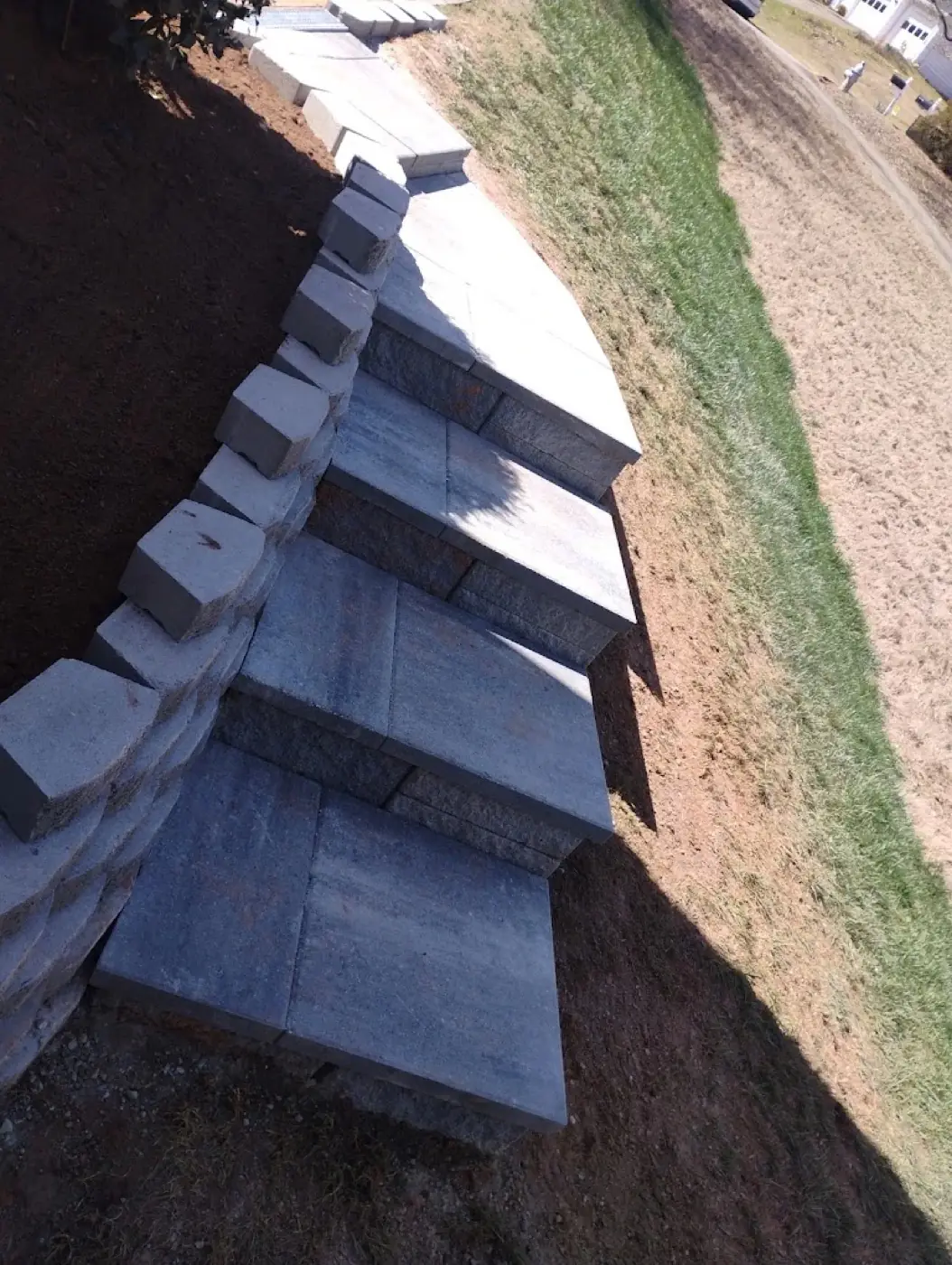
A sloped backyard is one of the most common things we see in north and west Gwinnett. It is hard to mow, hard to use and often washes out in heavy rain. A retaining wall turns that slope into flat ground you can actually use. Here are the ideas that work best.
Terraced walls
Instead of one tall wall, two or three shorter walls step down the hill. Each level becomes a flat area for lawn, a garden bed or a patio. Shorter walls are also easier to build well and look less imposing from the house.
A wall with built-in steps
Steps set into the wall connect the levels and make the whole yard reachable. Block steps that match the wall look clean and hold up well.
Seat walls around a patio
A low wall at sitting height around a paver patio holds back the slope and gives you built-in seating. Add a cap and some lighting and it becomes the spot everyone gathers.
Raised planting beds
A wall can create a deep, level bed for shrubs, perennials or a vegetable garden. The extra soil depth helps plants grow in places where clay would otherwise hold them back.
Flattening the play area
For families, the best use of a wall is often simple: a flat patch of lawn or turf where kids can play and dogs can run. Artificial turf on a newly leveled area is a popular combination.
Every wall needs drainage
Water is what knocks walls over. When clay behind a wall gets soaked, it pushes hard. A wall built to last has:
- A compacted gravel base below the first course.
- Drainage gravel behind the wall, not clay.
- A perforated drain pipe at the bottom to carry water out.
- Fabric to keep soil from clogging the gravel.
Block or stone?
Segmental retaining wall block is the most common choice. It is strong, comes in many colors and textures, and builds a clean, consistent wall. Natural stone has a more rustic look and suits wooded lots. Taller walls may need engineering and permits, so plan for that early.
How tall can a wall be?
Short walls, around knee height, are the easiest to build and can often be done without engineering. Taller walls hold back much more soil and water, so they need deeper bases, reinforcement and sometimes a permit and an engineer's design. If your slope is steep, two shorter terraced walls are often safer and better looking than one tall wall.
Signs an existing wall is failing
- The wall leans forward or bulges in the middle.
- Blocks or stones have shifted or fallen out.
- Soil or water seeps out through the face of the wall.
- The ground behind the wall has sunk or cracked.
Most failed walls we see were built without drainage behind them. Rebuilding with proper gravel and a drain pipe usually fixes the problem for good.
Planting around walls
Soften a wall with plants along the top and the base. Low shrubs, ornamental grasses and trailing groundcovers work well. Avoid planting large trees right behind a wall, since roots can push on it over time.
Timeline
A small garden wall can be done in a day or two. A larger wall with steps and drainage usually takes several days, depending on access and how much soil has to be moved.
Slopes across Gwinnett
North Gwinnett, from Buford and Sugar Hill toward Lake Lanier, has rolling hills and many backyards that drop off steeply behind the house. Southwest Gwinnett, around Lilburn and Norcross, has older homes on wooded lots that slope toward creeks. In both places, the slope usually means a backyard that is hard to use, mulch that washes out every storm, and soil creeping toward the fence. A wall, sometimes two, changes how the whole yard works. When planning one, think about how you want to use the flat space it creates, where water will go, how you will get equipment in and out, and whether you want steps, lighting or seating built in from the start rather than added later.
Quick answers
Do I need a permit for a retaining wall?
Short garden walls usually do not, but taller walls often do, and some may need an engineer's design. Check with your city or county before building anything tall.
Can a retaining wall fix erosion?
Yes. Holding the slope with a wall, along with drainage behind it, stops soil from washing down every time it rains.
Block or timber?
Timber walls cost less but rot over time in Georgia's humidity. Block and stone last far longer and need almost no upkeep.
Can you add steps to an existing wall?
Often, yes. Steps can be cut into or built alongside a wall, as long as the wall is in good shape and the base can support them.
EVG builds retaining walls and steps across Gwinnett County, especially on the hilly lots around Buford, Sugar Hill and Lilburn. Call for a free estimate.