
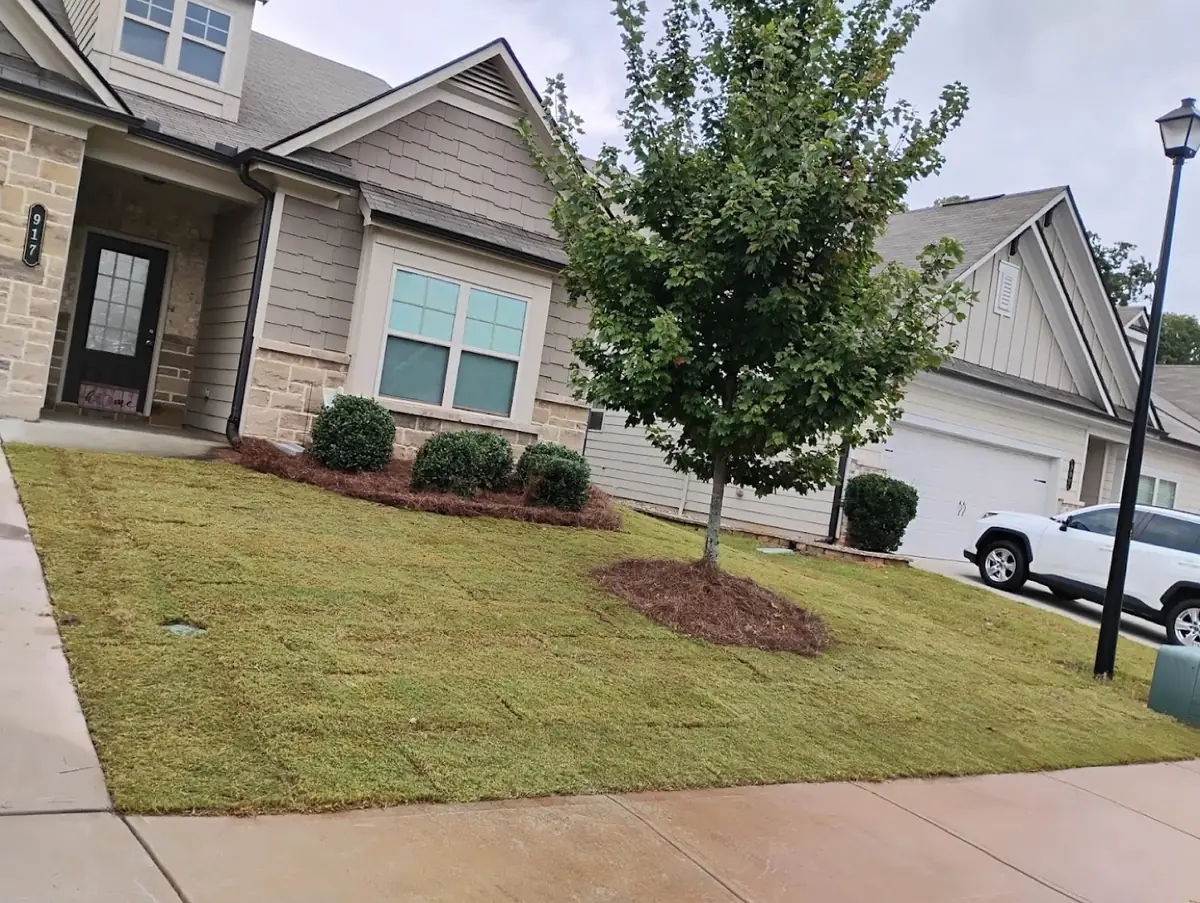
New sod is the fastest way to a finished lawn, but timing and prep decide how well it takes. Here's what we tell homeowners across Gwinnett.
The short answer
Most sunny Gwinnett lawns use warm-season grasses like Bermuda and Zoysia. These root fastest from late spring through summer, roughly April through August, when the soil is warm and the grass is actively growing. Fescue, a cool-season grass used in shadier yards, does best when it's installed in the fall, with early spring as a second choice.
You can lay sod most of the year in Georgia as long as it gets watered, but it roots fastest when it's growing. Warm-season sod laid in winter is dormant: it stays brown and won't fully root until spring.
Which grass fits your yard?
- Bermuda: needs full sun, handles heavy wear well and recovers fast. Turns brown when dormant in winter.
- Zoysia: thick and soft, handles a bit more shade than Bermuda, but recovers more slowly from damage.
- Centipede: low maintenance with a lighter green color. A common choice in Georgia.
- Fescue: stays greener through winter and handles more shade, but can struggle in the hottest part of summer.
Prep matters more than the date
Most sod problems we see come from skipped prep. Before sod goes down:
- Remove the old grass and weeds.
- Loosen compacted red clay so roots can push in.
- Grade the ground so it slopes away from the house.
- Rake it smooth and level so the sod sits flat.
- Lay the sod within a day of delivery, since it doesn't keep on the pallet.
Watering new sod
For the first couple of weeks, keep the sod and the soil under it consistently moist, but not soggy. Once the roots have taken hold (a corner won't lift when you tug it), water deeper and less often to push the roots down. Hold off on the first mow until the sod is rooted, and stay off it as much as you can until then.
Month by month in Gwinnett
- March and early April: soil is still cool. Fescue can go down now, but warm-season sod will sit there green-brown until the weather warms.
- Late April through June: the sweet spot for Bermuda and Zoysia. Soil is warm, rain is regular and the grass roots fast.
- July and August: still a good time for warm-season sod, but heat means it needs more water. Plan on watering every day for the first couple of weeks.
- September and October: the best time for fescue. Warm-season sod laid now will root some before it goes dormant.
- November through February: sod can still be laid if the ground is not frozen, but warm-season grass stays brown until spring and roots slowly.
New construction yards need extra work
Many newer homes in Dacula, Buford and Lawrenceville were finished with a thin layer of builder sod laid right on top of packed clay and construction debris. That grass often thins out within a couple of years because the roots never made it into the soil. If you are replacing a builder lawn, expect the prep to include pulling up the old sod, removing rocks and debris, and loosening the ground before anything new goes down.
How much sod do you need?
Measure each area you want covered, multiply length by width, and add the areas together. Add about five percent for cuts around beds, walks and curves. Odd shapes can be broken into rectangles and triangles. If you are not sure, a walkthrough with a landscaper will get you an exact number.
Mistakes we see most often
- Laying sod on hard, dry clay. The roots cannot get in, and the sod dries out in days.
- Leaving gaps between pieces. Edges dry out and weeds fill the cracks. Seams should be tight and staggered like bricks.
- Watering too little, then too much. Short daily watering early on, then deeper and less often once it roots.
- Mowing too soon or too short. Wait until it is rooted, and never take off more than a third of the blade at once.
- Picking the wrong grass for the sun. Bermuda in heavy shade will thin out no matter how well it was laid.
When you will see results
New sod looks finished the day it goes down, but the real test is a few weeks later. In warm weather, Bermuda and Zoysia usually knit into the soil within two to three weeks. By the end of the first season, a properly installed lawn should be thick enough to handle kids, pets and regular mowing.
Quick answers
Can I lay sod in the rain?
Light rain is fine and even helps. Heavy rain makes the soil muddy and hard to work, so it is better to wait.
Want it done right the first time? EVG handles the whole job, from tear-out and grading to sod installation and irrigation.